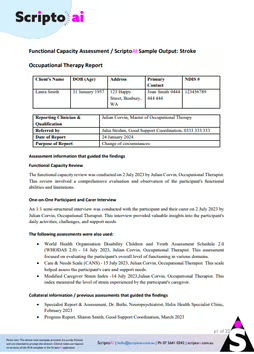

At Scripto, co-design isn’t a buzzword—it’s the cornerstone of our innovation strategy. From the outset, we’ve collaborated closely with occupational therapists and participants to develop a tool that not only meets clinical needs but optimises the way reporting documentation is handled in the NDIS space.
What is co-design in allied health?
Co-design involves integrating the end-users—those who will use the tools—into the product development process. This approach ensures that we gather real-world insights during brainstorming, planning, and implementing new features for our digital tools.
Scripto’s co-design approach Our founder, an occupational therapist herself, uses Scripto in her practice, ensuring our solutions are grounded in real clinical experience. We continuously seek feedback from our users, allowing us to refine our features based on actual needs and experiences. This ongoing dialogue helps us create a tool that truly supports the allied health community.
Breaking down barriers in allied health innovation
A significant challenge in healthcare innovation is navigating bureaucracy and rigid systems. By embracing co-design, Scripto has managed to support clinics in adopting transformative technology, ensuring our platform remains adaptable to real user needs. This approach improves efficiency and enhances the quality of care provided to participants.
Our product development process involves those who will use the tools and real-world insights.
JULIAN CORVIN, Founder of Scripto & OT
Inclusive innovation and the importance of diversity
Involving a diverse range of people in the co-design process is crucial. From therapists with various backgrounds and report writing goals, diversity enriches our platform, ensuring it is inclusive and adaptable to a wide array of needs. This diversity leads to better outcomes for both therapists and participants.
Future directions: Research and development
Looking ahead, Scripto plans to collaborate with academic institutions in Australia to conduct research on user behaviour and the perceptions of AI in disability care. This research will further inform our development process, ensuring our tools continue to meet the evolving needs of the NDIS community.
Accessibility at the forefront
Understanding the diverse needs of our users, we’ve integrated an accessibility toolbar into ScriptoAI. This feature empowers users with visual or sensory preferences by allowing them to enlarge text, switch between light and dark modes, and increase contrast. These options ensure that our platform is user-friendly and accommodates a wide range of accessibility needs.
Join us in shaping allied healthtech
We invite all therapists to be part of our platform’s evolution. Your feedback is invaluable in helping us grow and innovate. As we continue to develop and refine our tools, we remain committed to a collaborative co-design approach, ensuring Scripto evolves alongside the needs of the allied health community.
If you’re ready to experience the benefits of a truly co-designed platform, book a demo today and see how Scripto can make a difference in your practice.


