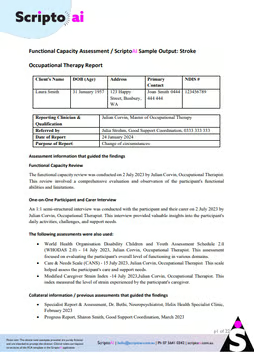
Hello, OTs! Diving deeper into our report writing process, let’s explore how to quantify support needs accurately, using evidence and structured data for adults with complex physical needs.
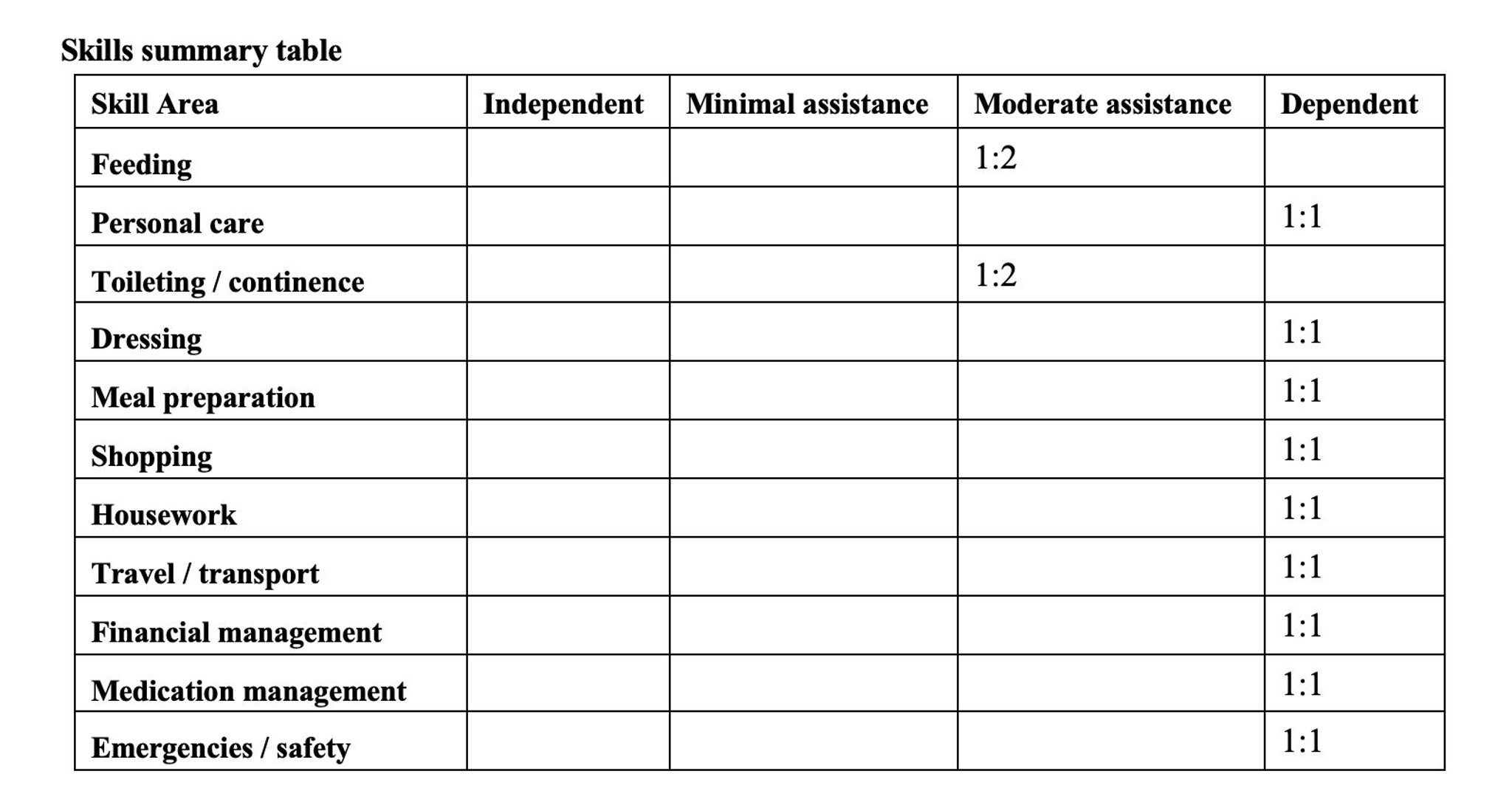
1. Skill summary table:
– Use a table to classify the participant’s abilities across key skill areas like feeding, personal care, and dressing.
– Clearly mark the level of assistance required (e.g., 1:2 for moderate assistance in feeding).
2. Detailed task analysis:
– Break down tasks into time requirements to ensure clarity and precision. For instance, meal preparation requires 1 hour daily, amounting to 420 minutes weekly.
– Specify the type of support such as supervision, prompting, and physical assistance, with levels marked (e.g., 1:1).
3. Calculate total support time:
– Sum up the total minutes per week to reflect the overall support needs (e.g., 4745 minutes translating to 79 hours weekly).
4. Participation and safety considerations:
– Identify additional needs for participation and safety. Allocate specific hours such as 10 hours per week for each, with detailed breakdowns in minutes per day and week.
– Ensure the total hours match the participant’s life preferences and goals.
By methodically applying these steps, we present a comprehensive view of support needs, enhancing the accuracy of our NDIS reports. Let this structured approach guide your practice, ensuring each participant receives the tailored support they deserve. This is especially key for individuals with complex support needs.
If you have anything to add to this strategy, please email us and share your knowledge!
Try Scripto free for 30 days and see why occupational therapists are calling it their “secret weapon” for NDIS documentation. Visit scriptoai.com.au to start your trial.