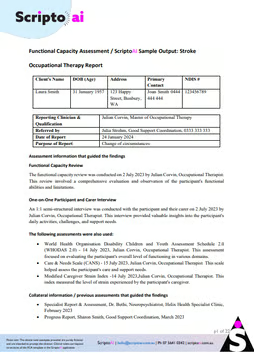
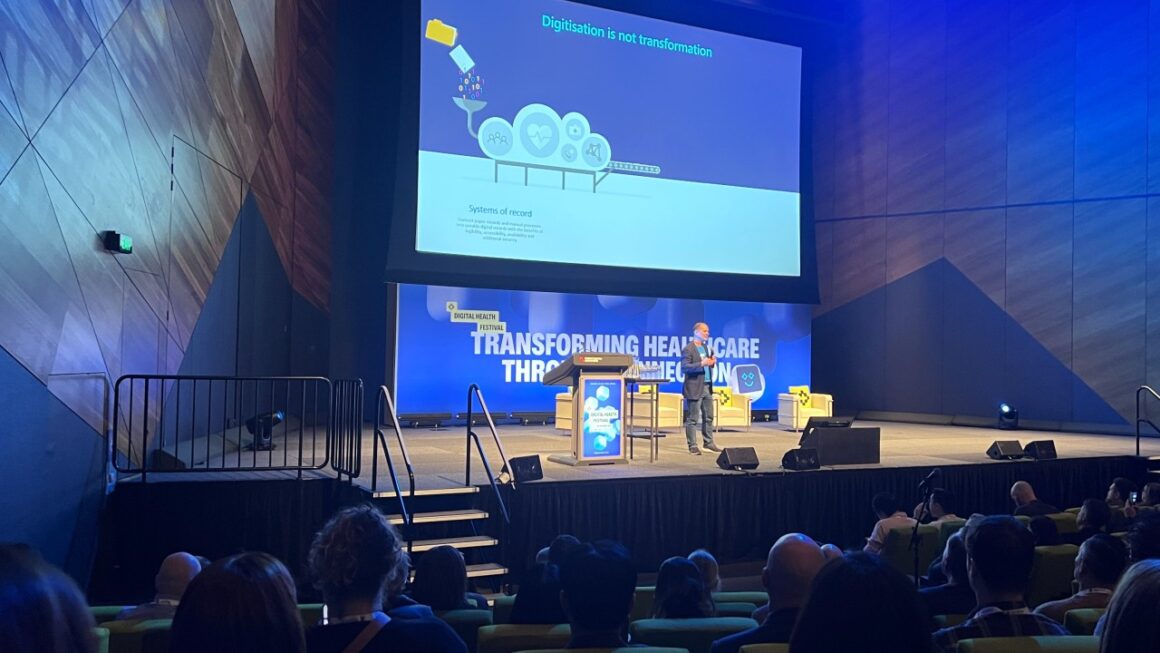
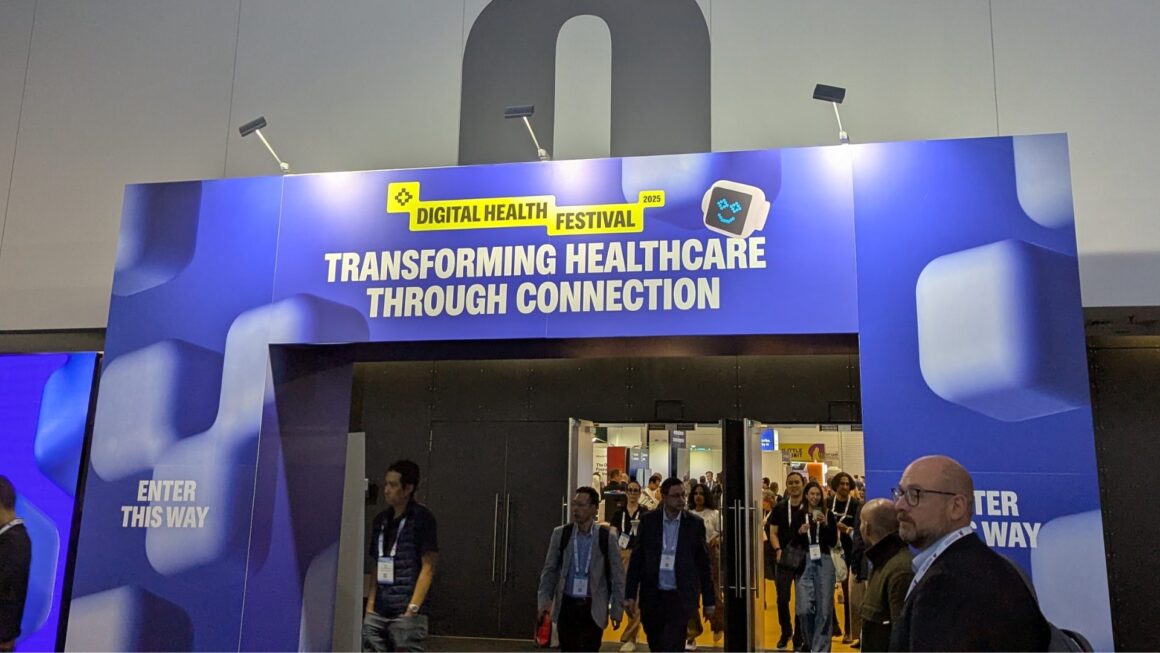
I’ve always been passionate about finding innovative solutions to support people with disabilities and the clinicians who serve them. This year, I had the opportunity to represent Scripto at the 2025 Digital Health Festival (DHF) in Melbourne—an experience that was equal parts fun, enlightening, and validating.
Stepping out of my comfort zone
The prep work to attend DHF was a bit of a roller coaster. As someone who’s at home at occupational therapy conferences and disability expos, the prospect of diving into a tech event filled me with a mix of excitement and trepidation. As occupational therapists know, changing your environment can be a key to personal growth, and DHF represented the perfect opportunity to challenge myself in a new setting.
I set goals for my participation:
- Connect with fellow founders and healthtech clinicians for peer support and momentum
- Capture insights through interviews with industry leaders
- Spread the word about Scripto’s mission
- Learn about cutting-edge developments in digital health
What I discovered was a vibrant ecosystem of innovation far broader than I had imagined, with over 8,000 senior executives, 200 exhibitors, and approximately 100 startups showcasing their solutions.
Finding my tribe
One of the most rewarding aspects of DHF was connecting with other healthtech clinicians and founders who understand the unique challenges of building a healthtech startup or transitioning into this area to explore other career options. Conversations with Giselle Torres Pabon and Jesse Costelloe from Rise, Dr. Ben Condon from Heidi Health and Jessica Francis from The Training Club provided not only practical advice but also the emotional fuel needed to continue pushing forward on this wild journey.
DHF’s event app was valuable, facilitating connections with like-minded individuals and enabling meeting scheduling with potential collaborators. The app support made networking feel less daunting and more purposeful.
Academic/clinical frontiers
I was particularly energised by conversations with researchers exploring the intersection of AI and healthcare. A fellow OT and budding PhD student, Rhys Forrer, shared his passion for starting research on AI applications in occupational therapy, while Araga Magotti (Akili Sono), a student from Macquarie University, detailed his work on automating ultrasound reporting—a problem space with parallels to what we’re solving at Scripto.
I was intrigued by a passing connection with Ettie Ben Shabat – a clinician and research lead from Alfred Health who’s developing an AI tool to analyse brain scans and determine optimal therapy interventions for patients with brain injuries. This could transform brain injury rehabilitation, especially when lack of insight and denial may be barriers to the recovery journey. During my placement at BIRU (Brain Injury Rehabilitation Unit) at Princess Alexandra Hospital, we frequently used video feedback to help improve occupational performance. Individuals were more likely to accept concrete evidence, like videos, so I can see how using brain imaging coupled with AI insights would assist therapists in breaking through these barriers to therapy engagement.
These conversations reinforced my belief in AI’s potential to transform clinical decision-making across all healthcare domains.
Spreading the automation gospel
Over the course of two days, I engaged with about 50 professionals, some of whom were practice owners seeking guidance on implementing tech solutions. My advice consistently centred on starting with manageable software that deliver immediate value to clinicians.
I found myself recommending AI scribes as an excellent entry point for practices new to AI integration. Software excels when focused on doing focused niches exceptionally well. AI scribes provide accurate transcription services and can generate concise documentation tailored to allied health needs. Among the options available, Heidi Health is my personal preference for allied health purposes (though I should note I have no commercial relationship with them).
Emerging technologies on the horizon
DHF provided a window into the future of healthtech. Lyrebird is soon releasing a feature that will assist OT with completing PDF forms—a potential huge value for OTs who regularly help clients with government applications like Companion Cards and taxi subsidy scheme applications.
Voice-based AI tools, including AI receptionists for clinical practices, were prominently featured. While I have some reservations about how these might work with vulnerable populations, I have heard anecdotal reports from founders who found AI-powered sales calls more effective than their human counterparts.
What became increasingly clear is that the greatest ROI comes from tech that directly increases clinician capacity—both mentally and time-wise. Solutions like Scripto and AI scribes not only boost productivity but also combat burnout and improve clinician retention. As someone dedicated to supporting clinicians, I find these outcomes particularly meaningful.
Unexpected media opportunities
In a surprising turn of events, I found myself being interviewed by Channel 9 after just one cup of coffee! Scripto may be featured on A Current Affair the week of May 19, 2025, as part of their DHF coverage. Additionally, PulseIT journalist Heather Fletcher wrote a lovely piece highlighting Scripto and my journey as a female founder. These opportunities to share Scripto’s story with broader audiences are invaluable as we continue to grow.
Powerful conversations
One highlight was my interview with Dr. Ben Condon from Heidi Health. He shared insights about their upcoming global expansion and commitment to maintaining their Australian presence even as they scale internationally.
What resonated with me was Ben’s reflection on how his journey from emergency physician to healthtech advisor has transformed him personally. He described becoming more aware of the vast digital health ecosystem, feeling humbled, rediscovering his creativity, and breaking free from the algorithmic thinking often associated with clinical work.
I also interviewed Giselle Torres Gabon, female founder from Rise, exploring how entrepreneurship had changed us both. Common themes emerged around letting go of perfectionism, building confidence through action—lessons that continue to shape my approach to building Scripto.
The social side
Beyond the professional connections, DHF After Dark provided a welcome opportunity to unwind and connect in more relaxed settings. These informal interactions often led to the most authentic conversations.
Looking forward
As I reflect on my experience at DHF, I’m filled with renewed energy and determination to continue improving Scripto. The connections made, insights gathered, and validation received have provided valuable “courage fuel” for the journey ahead.
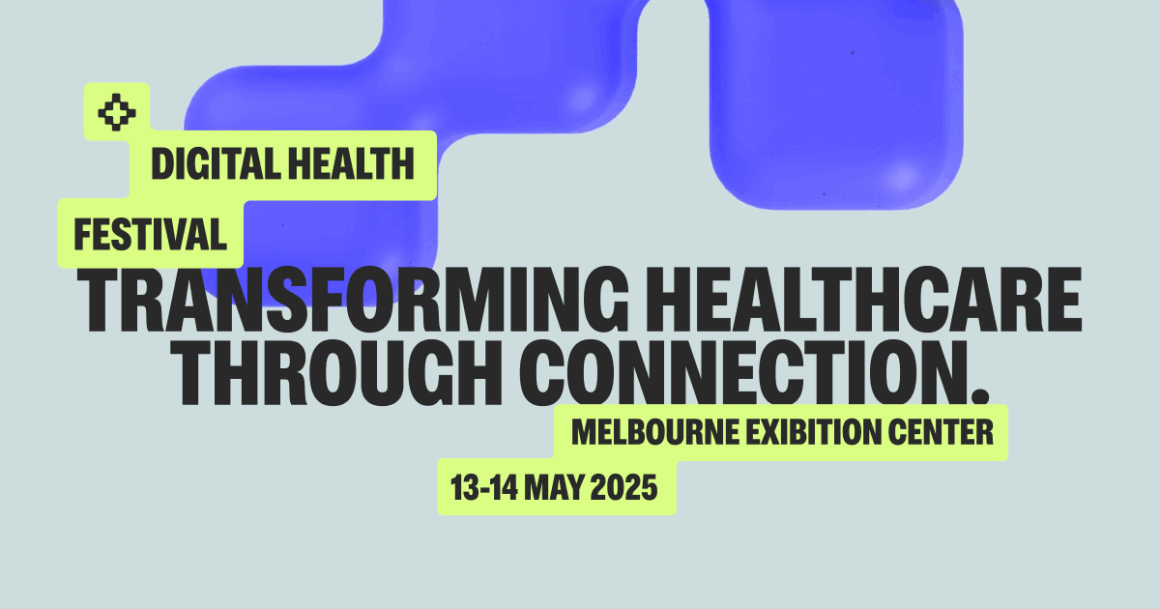
For those considering attending next year, mark your calendars for May 20-21, 2026, at the Melbourne Convention Centre. Based on my experience, it’s an unmissable event for anyone at the intersection of healthcare and technology.
In the meantime, I’ll be implementing lessons learned and continuing our mission at Scripto: empowering occupational therapists to spend less time on documentation and more time doing what they do best—changing lives through meaningful interventions.
If you’re interested in seeing more from my DHF experience, check out the video diary on Scripto’s YouTube channel featuring my reflections, conference highlights, and Melbourne sights. Additional interviews exploring personal growth and featuring some of the interesting professionals I ran into and their companies can be found on my LinkedIn page.


